


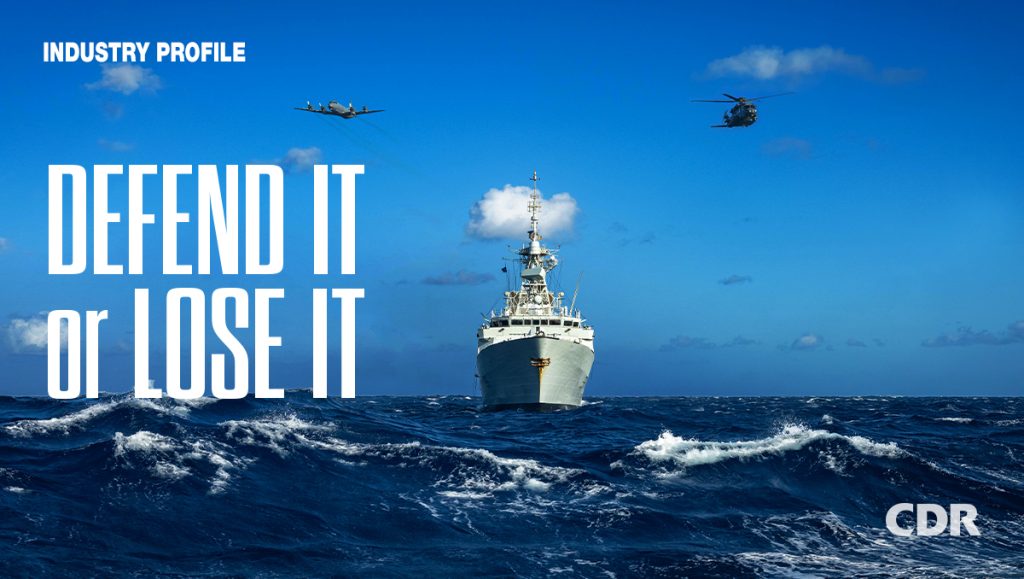
GDMS: DEFEND IT or LOSE IT
Canada’s Sovereign Control Over Anti-Submarine Warfare Technology is at Risk
BY NATASHA SUTHERLAND
There is universal recognition that Canada is at a pivotal moment in its geopolitical history.
Now – more than ever – there is a need to ensure Canada has access to technological advantage to re-establish itself as a leader in military readiness on the global stage. Underpinning this need is a requirement for Canada to maintain sovereign control over the most critical defence capabilities –enabling the ability to maintain and upgrade these capabilities independently.
“This is truly an inflection point where Canada has an opportunity to demonstrate concrete commitment with investment in its own defence industrial ecosystem,” said Tony Morris, Vice President, Air and Naval Systems, General Dynamics Mission Systems–Canada. “Canada has exceptionally talented engineers who can and have delivered – for decades – made-in-Canada solutions that stand the test of time.”
One area of defence technology where Canada has a deep pedigree of successfully fielding Canadian innovations is in Anti-Submarine Warfare (ASW). ASW technologies provide the ability to find, fix, track, target, and engage underwater threats during highly complex military operations bringing together aircraft, surface warships, submarines, and uncrewed air and naval platforms. For decades, Canadian industry has been equipping the Royal Canadian Navy’s (RCN) and Royal Canadian Airforce’s (RCAF) maritime patrol assets with fully fitted Canadian designed and built ASW technology.
However, recent procurements – including the P-8A Poseidon and Canadian Surface Combatant (CSC) – have redirected significant ASW spending outside of Canada and will result in a weakened industrial capability and a loss of sovereign control of this critical technology that Canada has invested in – and benefitted from – for decades.
IT’S NOT TOO LATE
Canada has signaled a renewed focus on critically reviewing procurements that establish foreign control over its military technology. This foreign spending versus domestic investment renders Canada beholden to other nations for critical asset sustainment, like the supply of parts and future software upgrades.
With Canada developing its Defence Industrial Strategy, now is the time to take inventory of the technologies, like ASW, where Canada has true technological leadership, and to leverage years of investment to bolster defence industrial strength here at home.
PROVEN DOMESTIC AND EXPORT ASW SUCCESS
With the Arctic region becoming more accessible and contentious, Canada and its NATO allies are bracing for an increase in the volume and complexity of underwater threats, expanding the need for underwater surveillance and monitoring from above and below the surface.
GDMS–Canada has been working with Canadian industry partners and a wide range of government organizations, including Defence Research and Development Canada, on advancements in ASW technologies for decades. This Canadian ASW ecosystem has generated world-leading acoustics processing products and a deep talent pool that is as strong as any country in the world.
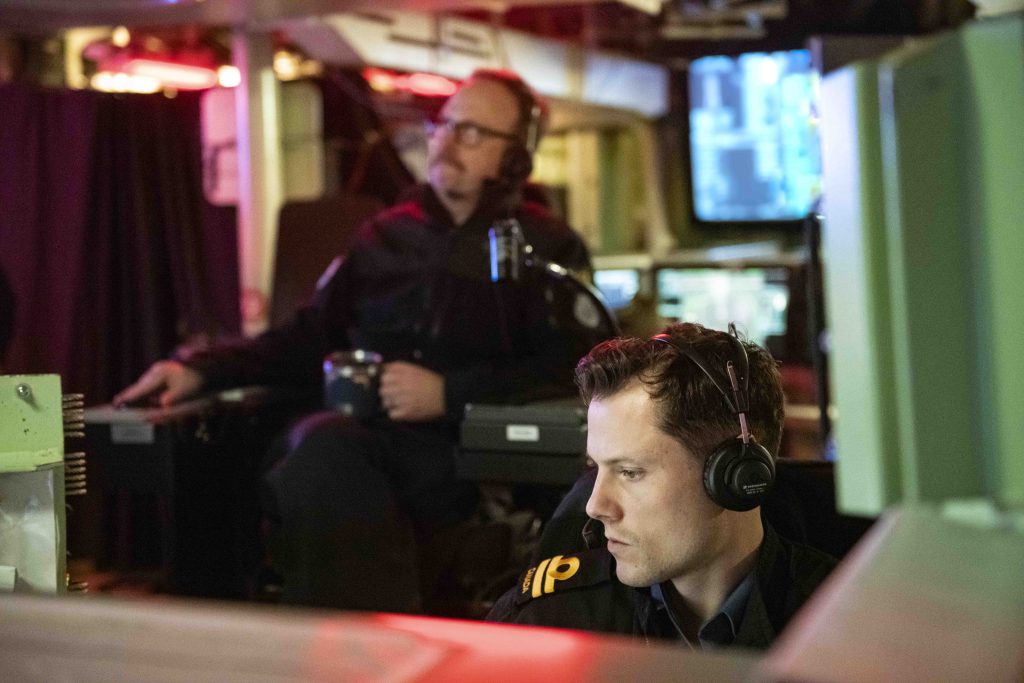
Canada’s ASW enterprise consists of capabilities on operational platforms, as well as central intelligence infrastructure. Currently, Canada has the ability to tie together the sensor data on the CH-148 Cyclone, CP-140 Aurora, and Halifax Class Frigates with the Canadian Armed Forces’ Acoustic Data Analysis Centre. This provides Canada with complete control of its critical acoustics intelligence data. With the Underwater Warfare Suite Upgrade (UWSU) program, Canada is developing a new fully integrated ASW capability for the Halifax-class frigates that will continue to support this concept.
“Data is everything in modern conflict. Achieving decision advantage comes down to the ability to take a lot of data, process it quickly, and act before your adversary does. The UWSU program has recently demonstrated exactly that through successful sea trials,” said Morris. “With a fully integrated sonar sensor suite, we’ve been able to bring together data from the towed array and hull-mounted sonars, sonobuoys, and dedicated torpedo intercept sensors, to provide the RCN with overmatch capability.”
Canadian industry also has significant ASW exports to Europe, Asia, and South America – where systems originally developed for Canada routinely face down the most dangerous underwater threats in the most challenging environments in the world.
“Allied nations seek out Canadian industry because we have a reputation as the global ASW leader: on aircraft, on naval vessels, and on uncrewed systems. The technology developed here has become an export success story resulting in significant economic benefit to Canada,” said Morris.
MADE-IN-CANADA INTEROPERABILITY
When it comes to multinational operations, Canada has repeatedly discussed a desire for ‘interoperability to the point of interchangeability’. NATO has developed standard protocols to enable nations to develop sovereign capabilities and seamlessly integrate into the allied operational space.
“These NATO protocols provide room for innovation without being vendor-locked to any one defence contractor, so you’re not stuck with one solution,” said Morris. “With these standards in place, and the ability to leverage a common tactical data link network like Link 16, we can have interoperability using made-in-Canada capabilities.”
Interoperability and interchangeability are made possible using open architecture systems, which are platform and sensor-agnostic, allowing for integration across crewed and uncrewed assets across all domains. Canada and our defence industrial base need to grow their footprint in military applications of uncrewed systems for ASW and other warfighting domains. With its new Centre of Excellence for Remotely Piloted Aircraft Systems and related technologies, GDMS–Canada is leading efforts to bring it all together while considering the realities of modern combat.
“Some of the most critical lessons learned in Ukraine centre around the importance of continuous integration, continuous delivery, and rapid capability insertion,” Morris explained. “To achieve this, Canada is going to need ecosystem collaboration combining the agility of small and medium emerging technology players and the expertise and pedigree of large defence and dual-use companies.”
USE IT OR LOSE IT
Canada’s Minister of National Defence the Honourable Bill Blair spoke at the 2025 Conference of Defence Associations Institute’s Annual Ottawa Conference: “Canada needs to stand on its own two feet”.
To meet this critical moment in time, there is a need for Canada to think differently, particularly about how it procures military technology. The upgrade cycle for software in particular, which is where the warfighting capability evolves fastest, should not be surrendered to other nations where we will be at least second – and quite possibly third or fourth – in line to an update when we need it most. Again, we must look no further than the speed of evolution in Ukraine.
With its Defence Industrial Strategy, the Government of Canada is looking to adapt defence procurement with bold and renewed efforts to support areas of Canadian industrial strength. A focus on defence technology – like ASW – will provide warfighting advantage coupled with an investment in Canadian ingenuity, Canadian industry and high-skilled workers, and the Canadian economy.
Article Submitted by General Dynamics Mission Systems-Canada
