


TDG Transit Design Group – TECHNOLOGY FOCUS
How TDG Transit Design Group urns Tough Problems Into Bright Solutions
Lighting the Way
BY JEREMY HULL
When Marc Gagné joined TDG Transit Design Group in Mississauga, Ontario, the company was small enough to fit everyone into a single boardroom.
“I think I was one of seven employees,” recalls the now-President and CEO. “We sort of grew this company one LED driver at a time, one application at a time… we were the ones that would put our hands up and say, ‘Yeah, we can do it.’”
That readiness to take on complex, unconventional challenges has defined TDG’s rise from a niche Canadian rail lighting retrofitter to a global leader in LED, OLED, and MicroLED main and emergency lighting systems, energy storage devices, and smart ceiling controls with nearly 200 employees across five countries. It’s also what drew the company into the defence sector, where its reputation for rugged, custom-engineered solutions looks to be to be a strong fit with the needs of Canadian defence programs today.
FROM RAIL RETROFITS
TO GLOBAL REACH
Founded in 1989, TDG’s early focus was almost exclusively on retrofitting rail vehicles. In 1999, the company began experimenting with LEDs for functional lighting. By 2003, it had delivered one of the first LED main lighting systems to enter revenue service anywhere in the world.
“We started using LEDs for retrofits in what I guess you could call ‘pain in the butt’ applications,” Gagné told CDR. “A very high light that required a ladder to change every 500 hours with an incandescent could now be replaced with a 50,000-hour LED.”
Those successes led to contracts for new rail builds, the establishment of a Buy America-compliant facility in North Tonawanda, NY, and later expansion into Europe and Asia. India became a particularly strong growth market during the pandemic, as rail infrastructure projects there moved forward at what Gagné calls “an unbelievable pace.”
Today, TDG operates facilities in Canada, the U.S., France, Poland, and India. It has developed more than 12,000 unique part numbers to meet customer needs.
ENGINEERING FOR THE TOUGHEST ENVIRONMENTS
TDG’s speciality is ruggedized lighting and energy storage systems designed to operate in harsh, high-vibration environments, whether mounted under a freight locomotive or inside a naval vessel.
“The land-based defence sector and rail have a lot in common,” Gagné explains. “They’re both moving, both operating at a non-standard voltage, and both have to be very ruggedized to survive in their environment. And in both sectors, the equipment stays in service for 30 years or more.”
This parallel has helped position TDG as a natural supplier for defence, where reliability and durability are paramount.
PIVOTING TO DEFENCE
The company’s formal move into defence began in 2022, encouraged by Paul Church, President of Cleave Technologies.
“He came in and said, ‘With the amount of stuff that’s happening in defence, you need to start having discussions with the federal government because you’re exactly what they’re looking for.’” Introductions through FedDev and other agencies followed, leading to early contracts in the U.S. and Europe. While Canadian defence work takes time to secure, TDG is now firmly in the conversation with major primes and government buyers.
One standout innovation is the graphene capacitor emergency lighting system developed as an alternative to lithium-based batteries to address supply chain vulnerabilities.
“Batteries are chemistry, capacitors are physics,” says Gagné. “A capacitor can fully charge in 15 minutes and run an emergency spotlight for four or five hours. Graphene is here. Everything we need to make capacitors is here in Canada.”
This Canadian-made solution aligns with “no oceans” procurement policies by using domestic graphite instead of imported minerals and is already being considered for base emergency lighting.
R&D AT THE EDGE
TDG’s defence-oriented R&D pipeline includes hardened lighting systems built to withstand an electromagnetic pulse (EMP) and continue operating. These systems integrate battery backup and UV antimicrobial technology.
“If the lighting is used for surgical applications or in a medical bay, in the event of a catastrophic power loss, the capacitors can keep it running,” says Gagné. “Units can talk to each other. You can divert power from one you’re not using to one you are until primary power is restored.”
This project blends TDG’s health-sector work, using UVA and UBC LEDs to reduce microbial loads, with the demanding requirements of military applications.
CUSTOM BY DESIGN
What distinguishes TDG from many competitors is its emphasis on custom engineering rather than catalogue products.
“We’re not a company that has 25-part numbers and makes it fit regardless,” Gagné says. “We’re interested in solving issues.”
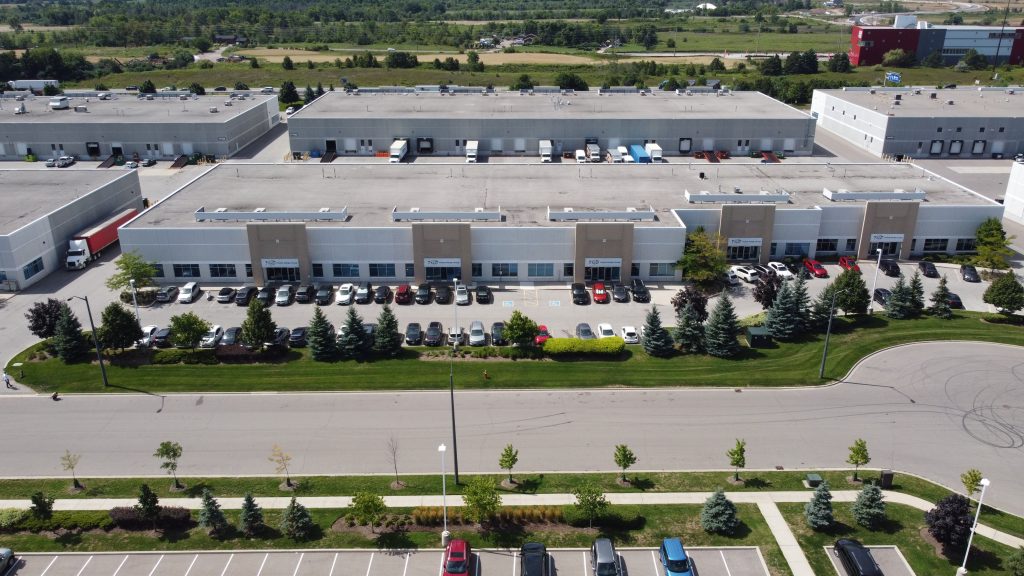
The company’s Mississauga headquarters houses mechanical, optical, and electrical engineering teams, along with SMT board production, 3D printing, CNC machining, and dedicated test facilities.
Engineers are expected to prototype and assemble their own designs before production. “The last thing we want is a beautiful model that’s unmanufacturable when it gets to the production floor,” Gagné told CDR. “Build it yourself first. Learn what’s wrong with it, and you become better for it, and so do we as a company.”
PEOPLE POWER
From seven employees to nearly 200, Gagné has worked to preserve TDG’s “small company mindset” — direct communication, rapid pivots, and collaborative problem-solving. “I always want to be a company of ideas, not a company of paperwork,” he says. “We don’t want our primary export to be paper. We want it to be product, and we want it to be innovation.”
That philosophy has helped attract and retain talent through strong co-op programs with McMaster University and Niagara College. Many students hired on co-op stay with TDG full-time. “I want to bring as many smart people into this equation as I can,” says Gagné. “And I don’t want to rule anyone out.”
LOOKING AHEAD
Rail still accounts for 80% of TDG’s business, and Gagné expects steady demand from fleet turnover in markets like New York, VIA Rail, and Europe.
But he also sees defence and health as the company’s fastest-growing sectors. Both require the kind of rugged, custom-engineered solutions that have become TDG’s signature.
“Innovation, innovation, innovation,” says Gagné. “If I can scream that from the hilltop in terms of what I want us to be known for, that would be it. We’re willing to take a small opportunity just to learn from it and then take that knowledge and expand it elsewhere.”
From pioneering LED lighting in rail cars to developing EMP-hardened systems for defence, TDG has built its reputation on solving problems others thought impossible.
With a culture that rewards creativity and a global footprint anchored in Canadian engineering, the company is ready to light the way for its next chapter.
Jeremy Hull is CDR’s Halifax Correspondent
