

Canada’s $118 Million Kongsberg Deal Strengthens Its Armoured Fleet — But Leaves an Anti-Tank Gap to Fill
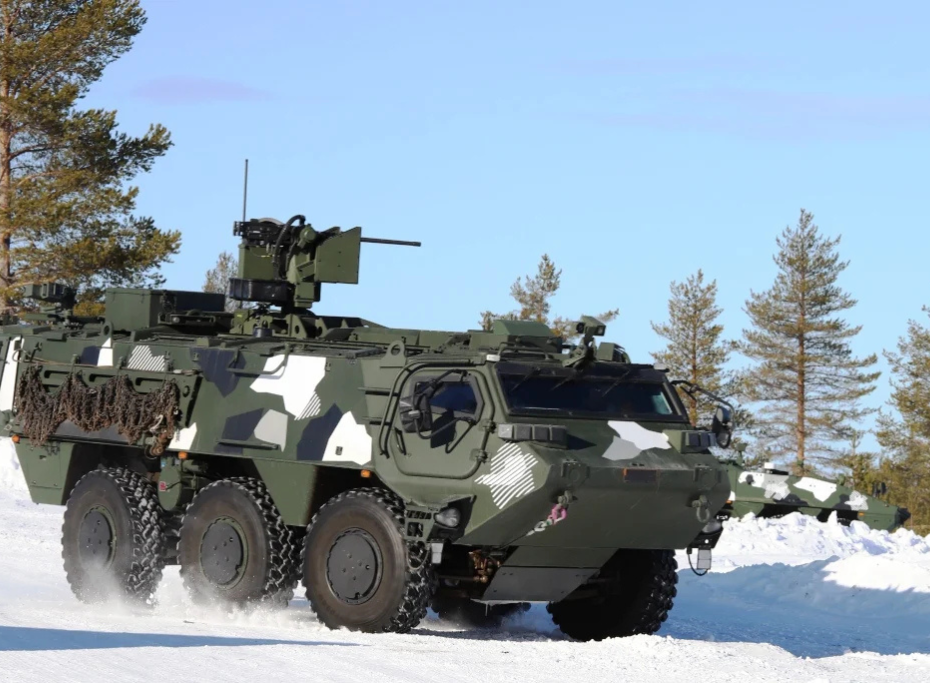
Canada is moving to sharpen the firepower and survivability of its armoured fleet, with Kongsberg securing a C$118 million contract with General Dynamics Land Systems–Canada to provide PROTECTOR RS4 remote weapon systems for the Canadian Army’s Armoured Combat Support Vehicle fleet. The agreement represents another step in the Army’s effort to modernize its vehicle fleet, but also exposes a larger problem: Canada still needs a more substantial modern anti-armour capability if its land forces are expected to fight a high-intensity conventional war in Europe.
The Kongsberg award is significant because the ACSV is intended to operate alongside Canadian armoured formations, providing protected mobility and combat support to troops operating close to the front. In that environment, a remotely operated weapon station is more than a replacement for a crew-served machine gun. It can give vehicle crews improved observation, targeting and engagement capabilities while allowing them to remain well protected. Yet the battlefield lesson emerging from Ukraine is equally clear: machine guns and automatic grenade launchers cannot substitute for dedicated anti-tank guided missiles when armoured forces encounter modern tanks and fortified positions.
READ: Kongsberg to Deliver Remote Weapon Systems for Canadian Army ACSVs
A More Lethal ACSV Fleet
Kongsberg’s PROTECTOR RS4 is a stabilized remote weapon station designed to accommodate small- and medium-calibre weapons as well as anti-tank guided missiles. Its electro-optical sensors provide day-and-night observation, while its 2+2-axis stabilization and Detached Line of Sight architecture allow the weapon and sight to operate independently, supporting target tracking and accurate fire while the vehicle is moving. For Canadian soldiers, one of the most important advantages is that the weapon can be operated from inside the protected vehicle, increasing crew survivability while providing enhanced situational awareness and fire-control capability.
Beyond those immediate advantages, the RS4 offers considerable flexibility. Depending on configuration, the system weighs approximately 135 to 190 kilograms before weapons and ammunition are installed, and Kongsberg describes it as platform-independent and suitable for both stationary and mobile operations. The latest order follows an earlier Kongsberg order for the ACSV program. That program initially called for 360 vehicles and was later expanded by another 190, creating a sizeable fleet in which the RS4 can provide a common remote-weapons architecture. Kongsberg has not disclosed how many RS4 systems are covered by the new contract or their delivery schedule.
That commonality matters in a prolonged conflict. A vehicle fleet is only as useful as its ability to generate combat power repeatedly, and standardized sensors, weapon stations, training and maintenance arrangements can make a significant difference when ammunition, spare parts and personnel are under pressure.
The Anti-Tank Question
For all of the RS4’s advantages, however, Canada cannot afford to confuse improved remote firepower with a comprehensive anti-armour capability. The issue is particularly important in the context of Canada’s NATO mission in Latvia, where Ottawa has sought to strengthen the anti-armour capability of its deployed forces through the procurement of Rafael’s Spike LR2. That capability is valuable, but it was acquired as an urgent operational requirement for the Latvia mission rather than as a wholesale modernization of Canada’s armoured and mechanized formations.
The scale of the requirement becomes clearer when Canada’s tank fleet is considered. Current Canadian Armed Forces fleet information lists only 74 Leopard 2 main battle tanks left in the Army’s inventory as Ottawa donated eight Leopard 2A4 main battle tanks to Ukraine to aid it in its fight against Russia.
This meagre tank force is further strained by Canada’s NATO commitments. Since 2023, Ottawa has maintained a Army tank squadron of 15 Leopard 2 tanks in Latvia as part of Operation REASSURANCE, meaning that a significant portion of the Nation’s combat ready armoured force is forward deployed and not defending the homeland.
At the same time, Canada’s heavy-armour modernization remains a long-term challenge. The Leopard 2 fleet must remain relevant while Ottawa considers the future of its armoured forces, and the Army must balance domestic force generation with its growing NATO responsibilities. Replacing a main battle tank fleet is a lengthy process involving requirements development, industrial capacity, procurement, training and infrastructure.
Against that backdrop, additional portable anti-tank weapons could provide a relatively rapid way to increase lethality without waiting for an entirely new armoured formation. Such weapons would not solve the Army’s broader tank problem, but they could give Canadian commanders another layer of anti-armour capability while Ottawa works through the much longer process of rebuilding its heavy forces.
Why the Javelin Could Be the Stop-Gap Solution
One option Canada should examine closely is the FGM-148 Javelin. The case for the Javelin is not simply that it is a sophisticated anti-tank weapon; it is that the system is already integrated into the forces of major NATO allies, has extensive combat experience, and continues to be modernized for contemporary warfare.
In 2026, the Javelin Joint Venture delivered the first Lightweight Command Launch Units to the U.S. Army. The new launcher is approximately 25 percent lighter and 30 percent smaller than the legacy Command Launch Unit while providing roughly twice the target-detection and recognition range. It remains compatible with current, previous and future Javelin missile variants. For a Canadian Army increasingly concerned with mobility, survivability and distributed operations, those improvements are significant. A lighter launcher reduces the burden on infantry anti-armour teams, while greater detection and recognition range can help crews identify armoured threats before they are themselves exposed.
Importantly, the LWCLU is an upgraded launcher rather than a completely new Javelin missile. The underlying Javelin family remains a mature system, while its launcher and production infrastructure continue to evolve. For Canada, that could make Javelins an attractive stop-gap rather than a replacement for Spike LR2. The objective would instead be to build a deeper, layered anti-armour network: Spike LR2 for existing NATO commitments, Javelin for infantry and mobile anti-armour teams, and potentially future vehicle-mounted missiles integrated with platforms such as the ACSV where appropriate.
Ukraine Has Already Written the Test Report
More importantly, few modern anti-tank systems have accumulated a battlefield record comparable to the Javelin. Ukraine received thousands of Javelins before Russia’s full-scale invasion, and Ukrainian forces subsequently employed the weapon extensively against Russian armoured vehicles after February 2022. Its fire-and-forget design allows the operator to launch and immediately seek cover rather than remain exposed while guiding the missile to its target, while its imaging-infrared seeker enables engagement based on the target’s thermal signature.
The missile’s top-attack profile is another important feature. Rather than concentrating its attack against a tank’s strongest frontal armour, the Javelin can strike from above, where armour protection is generally less substantial. Its tandem-warhead design is intended to defeat explosive reactive armour before the primary warhead attacks the vehicle’s main armour. Together, these characteristics have made the Javelin particularly valuable in Ukraine, where armoured formations operate under constant threat from dispersed infantry teams equipped with portable anti-tank weapons.
To showcase this, a Pentagon report in May 2022 stated that 100 of the first 112 Javelins fired by Ukrainian forces had hit and destroyed their targets, an approximately 89 percent kill rate. That figure describes a particular early-war sample rather than a universal battlefield probability, but it nevertheless illustrates why the Javelin became one of the most closely watched Western anti-armour weapons of the conflict.
More broadly, Ukraine demonstrated the value of portable, fire-and-forget anti-armour weapons on a battlefield where tanks operate under constant threat from infantry, drones, artillery and other precision weapons. The lesson for Canada is not that Javelins alone can stop an armoured offensive — no single missile can — but that relatively small infantry and mechanized units can use such weapons to threaten expensive armoured vehicles without depending exclusively on tanks, artillery or aircraft. For a Canadian Army whose heavy forces remain limited in number, that distributed lethality could be especially valuable.
Putting Missiles on the ACSV
Here the Kongsberg contract becomes particularly interesting. The RS4 is capable of accommodating anti-tank guided missiles, but the newly announced Canadian contract does not establish that the Army will equip the contracted systems with Javelins or another ATGM. That distinction is important. Nevertheless, an RS4-equipped ACSV provides Canada with a technological foundation for greater vehicle-level lethality, and if Ottawa eventually integrates an appropriate anti-tank missile onto selected vehicles, the result could be a protected mobile platform combining advanced observation, stabilized weapon engagement and anti-armour effects.
Such a configuration could complement rather than replace dedicated infantry missile teams. In a NATO ground war, Canadian ACSVs would not be expected to operate as main battle tanks; their value lies in supporting manoeuvre forces, transporting personnel and equipment, recovering vehicles, sustaining forward units and operating within the broader tactical formation. Giving selected platforms additional precision anti-armour capability could nevertheless complicate an enemy’s calculations and provide Canadian commanders with another layer of protection.
At the same time, Canada should avoid turning every ACSV into a tank destroyer. Missile integration has consequences for ammunition carriage, crew workload, logistics, training and vehicle weight. A more sensible approach would be a layered fleet in which specific vehicles or variants are optimized for particular battlefield roles. Some could concentrate on protected troop transport and combat support, while others could carry additional sensors or anti-armour weapons, allowing the fleet as a whole to provide greater tactical flexibility.
The Tank Crisis Cannot Be Solved With One Missile
Javelin missiles would therefore be a useful bridge, not an answer to Canada’s armoured-force problem. Ultimately, the deeper challenge is the size and age of Canada’s heavy-armour fleet. The CAF currently only fields 74 Leopard 2 main battle tanks, and the Army faces the much longer task of determining, procuring and fielding its next generation of armoured capabilities. Replacing a main battle tank fleet is a lengthy process involving requirements development, industrial capacity, procurement, training and infrastructure.
For a country committed to a substantial NATO land presence in Latvia, the consequences are significant. Canada is not merely buying equipment for a theoretical contingency; it is maintaining a forward land commitment on NATO’s eastern flank, where an adversary’s armoured forces would represent one of the most serious conventional threats. In that environment, the Army needs more than a handful of highly capable platforms. It needs depth.
That means sufficient tanks, infantry fighting vehicles, reconnaissance assets, recovery vehicles, artillery, air defence, drones, electronic warfare systems and anti-armour weapons — backed by the ammunition stocks, spare parts and training capacity required to sustain them. Canada has already committed significant armoured resources to Ukraine and NATO, including Leopard 2 tanks and ACSVs, reinforcing the importance of maintaining sufficient depth for both deployed and home-based forces.
Consequently, expanding anti-armour capacity could offer one relatively immediate means of strengthening the Army while larger modernization projects move through the procurement pipeline. A substantial Javelin buy would not remove the requirement for more tanks or a larger Spike capability, but it could give Canadian commanders more options during the vulnerable period before the Army’s next generation of main battle tanks arrives.
A Chance to Build Depth to Mitigate the Crisis
The C$118 million Kongsberg contract is therefore more than another armoured-vehicle equipment purchase. It is one component of a broader effort to make Canada’s land forces more survivable, networked and lethal. The PROTECTOR RS4 can give ACSV crews improved observation, stabilization, precision and protected remote engagement, while its architecture also leaves room for configurations involving anti-tank guided missiles.
But those advantages will matter most if they are paired with a larger anti-armour ecosystem. Canada should consider expanding beyond the limited Spike LR2 capability associated with its Latvia deployment and examine Javelin missiles as an immediately available, combat-proven complementary capability. The arrival of the lighter LWCLU also means Canada would be acquiring into an evolving system rather than simply buying an unchanged legacy weapon.
At the same time, Ottawa must continue with the harder work of rebuilding its main battle tank fleet. On a modern battlefield, survivability is not achieved by armour alone. A vehicle survives by seeing the enemy first, maneuvering intelligently, operating under cover, sharing information and possessing enough firepower to make the enemy hesitate before closing the distance. Only a main battle tank can do that.
For the time being, Canada’s new Kongsberg contract improves several of those ingredients. The next question is whether Ottawa will continue to provide the anti-armour firepower needed to mitigate this capability gap. For that reason, a large Javelin procurement — potentially combined with future missile-equipped RS4 vehicles — could serve as a practical short term stop-gap solution. Such a move would not replace the need for a modern Canadian tank fleet, but it could make the Army substantially more dangerous to an armoured adversary in the meantime.


