
Defence Programs Open New Doors for Canadian Companies
New federal programs like DI Assist and the Regional Defence Investment Initiative open defence procurement to non-traditional Canadian companies, but SMBs leave funding on the table.

New federal programs like DI Assist and the Regional Defence Investment Initiative open defence procurement to non-traditional Canadian companies, but SMBs leave funding on the table.
Level 1 is the entry point to the CPCSC framework. It is designed to establish a baseline of cybersecurity hygiene across Canada’s defence supply chain through a structured annual self-assessment process conducted by the supplier organization.

This Op-Ed is the fourth in a four-part series examining how to address critical supply chain challenges that directly impact the Canadian Armed Forces’ operational effectiveness and national security interests.

The need for infrastructure in Canada’s Arctic is urgent, but the execution will be complex.

The Carney government successfully passed its first budget. Now that the dust has settled, I’d like to offer some thoughts on what this might mean for Canadian defence as we go forward.

Both government and industry need to build a far deeper understanding of how risk flows within the supply chain—and what happens when something unauthorized, contaminated, or faulty enters the system.

“For Canada, clarity on this point is not just academic, it is the foundation of a coherent, principled defence posture, and it reflects the will of Canadians themselves.”

Michael Rosenlund explores how organizations must treat cyber security as a whole-of-business concern. Read the article now.

Learn about the power of networking from Jana Lee Murray at ADGA Group.
There is a rapidly growing potential opportunity for Canada to become a leader in autonomous systems technology. Read the latest from Mark Norman.
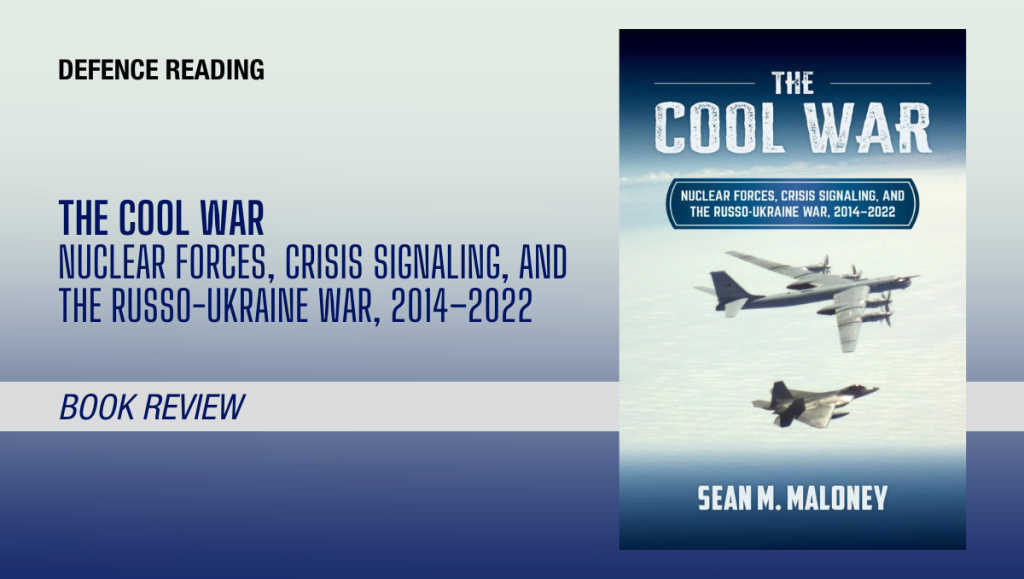
The Cool War: Nuclear Forces, Crisis Signaling, and the Russo-Ukraine War, 2014–2022 (Naval Institute Press, 2025) is a timely and authoritative analysis of how nuclear signalling functions in the twenty first century. While the book examines Russian nuclear behaviour from 2014 to 2022, it also offers a broader argument.
U.S. Department of Defense made the (CMMC) a binding condition of award. For Canadian primes and sub-tier suppliers in the U.S. defence supply chain, the immediate priority is Phase One: self-assessment and reporting to SPRS.

Special Army Edition Volume 31 Issue 6 is now available. Read the latest Letter from the Editor, Peter Kitchen, Editor-in-Chief.

Level 1 is a baseline, self‑attested level meant to safeguard the ordinary, unclassified contractual information you exchange to bid, win, and execute defence work.

THE CAF’S SUPPLY CHAIN: This Op-Ed examines how to address critical supply chain challenges that directly impact the CAF.