


When DAVID Sinks GOLIATH
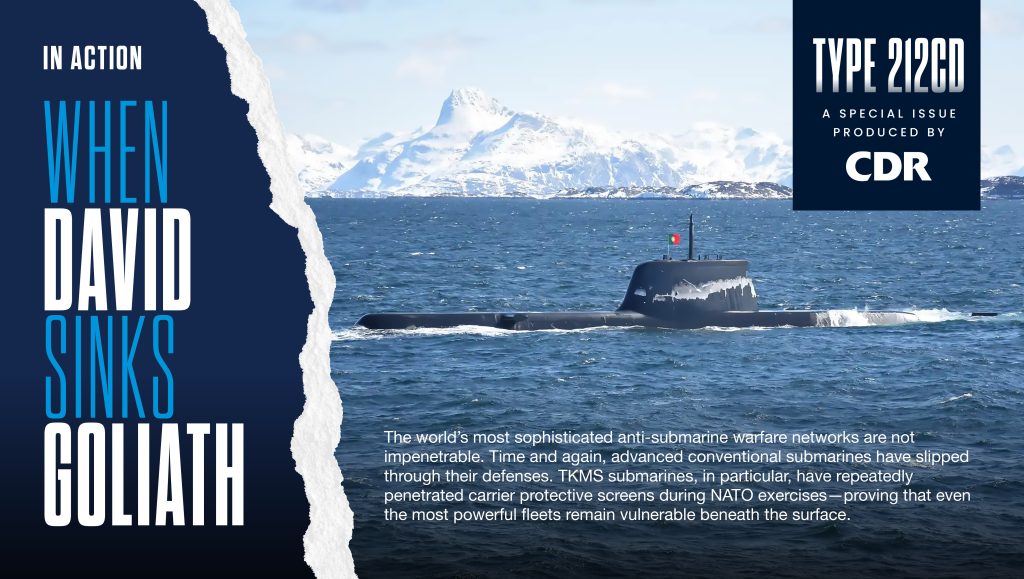
The world’s most sophisticated anti-submarine warfare networks are not impenetrable. Time and again, advanced conventional submarines have slipped through their defenses. TKMS submarines, in particular, have repeatedly pierced carrier protective screens during NATO exercises—proving that even the most powerful fleets remain vulnerable beneath the surface.
BY DANIEL KITCHEN
Although little is publicly known about recent submarine operations, the effectiveness of TKMS’ conventional submarines is nonetheless widely recognized. In 2001, the German submarine U24 – a Type 206A – silently breached the defensive screen of a US carrier battle group during a NATO exercise in the Caribbean and simulated successful torpedo attacks against USS Enterprise. The Type 206A, a distant predecessor of the 212CD, was originally built by TKMS in 1973, modernized in the 1990s, and remains in service with the Colombian Navy today. Designed for operations in the shallow waters of the North and Baltic Seas, the 500-ton submarine features a non-magnetic steel hull and an exceptionally low acoustic signature. However, it predates the introduction of Air-Independent Propulsion (AIP), which would later define subsequent generations.
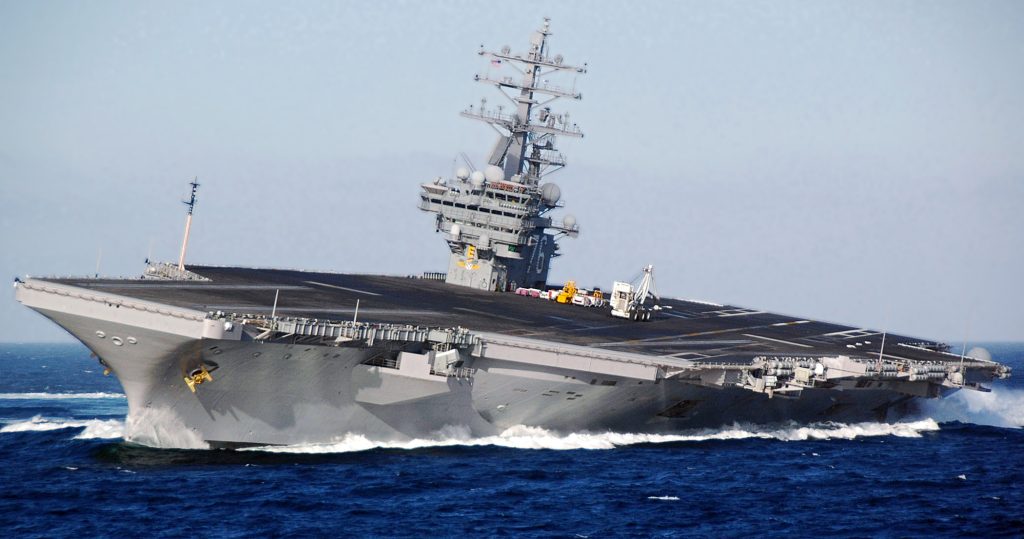
With the introduction of AIP in the early 2000s, these larger TKMS-designed submarines became even more difficult to detect – and capable of remaining submerged for far longer periods. In 2005, during multinational exercises off the US West Coast, a Swedish AIP diesel-electric submarine, HSwMS Gotland, also snuck past the layered defenses of a US Navy Carrier Strike Group. It then carried out simulated torpedo attacks that “sank” the nuclear-powered aircraft carrier USS Ronald Reagan before slipping away undetected.
To its credit, the US Navy responded to these virtual sinkings with professionalism and decided to integrate the experience into both their own and NATO’s learning processes. While the virtual defeat was obviously concerning, the Navy leased a Gotland-class sub from the Swedes in order to figure out how to counter its unexpected stealth.
READ: Type 212CD: Next-Generation Undersea Warfare for Canada’s CPSP
AIP TECHNOLOGY
As another member of the family of ultra-stealthy European conventional submarines, the story gives a clue as to the quiet design and game-changing potential of AIP technology. Instead of using diesel power in an internal combustion engine (which is quite loud), the Gotland-class sub uses optimized Sterling engines to charge batteries which store the energy to power the sub’s systems and run the engines. The result is a submarine that’s quieter than other diesel or even nuclear-powered submarines – the latter of which require a constant churn of coolant which can give its position away.
While Sweden opted for mechanical Sterling engines for the AIP, Germany’s navy and TKMS went for the even quieter and exhaust-free electro-chemical fuel-cell battery solution. AIP-Systems in general are ultra-quiet and enable an extremely high stealth level for submarines, but the fuel-cell solution takes it a step further. More on this fuel-cell solution below.
For Canada and the Royal Canadian Navy, the demonstrated successes of conventional submarines are worth studying—and represent a capability well within reach. TKMS’ Type 212CD, one of two contenders in the Canadian Patrol Submarine Project (CPSP), embodies the most advanced evolution of the technologies that have made its predecessors exceptionally difficult to detect.
“Partnership in the 212CD program will provide Canada with a rapidly deployable, NATO-interoperable submarine and full integration into the Alliance’s broader undersea fleet,” notes TKMS CEO, Oliver Burkhard. “By joining the established Norway–Germany partnership, Canada will reinforce the principle of collective defence and mutual protection that lies at the heart of NATO.”
Meanwhile, the lessons the U.S. Navy learned from its encounters with TKMS-built conventional submarines two decades ago remain just as relevant today. In naval warfare, stealth, advanced technology, and skilled seamanship can still defeat size and even the most sophisticated arsenal.
WHY AIP SUBMARINES SUCCEED
The reason U24 and Gotland were able to ‘sink’ US aircraft carriers was based on physics and smart non-nuclear engineering—as applied by a savvy captain and crew.
To underscore the significance of AIP: HSwMS Gotland’s edge came down to its propulsion system. While built by Kockums in Sweden, which at the time was part of HDW – later acquired by TKMS, Gotland’s AIP system differs from the one used in 212CD. While the Stirling engine AIP system also allows these subs to remain submerged for extended periods without snorkeling, they still emit exhaust fumes and their moving mechanical parts generate more noise, compared to the fuel-cell solution in operation in the Type 212A and part of 212CD.
While details about submersion times are closely guarded, a 212A TKMS submarine broke the world record for a conventional sub with over two weeks under water. Traditional diesel-electric submarines must either surface or raise an air-breathing snorkel after a few days underwater to recharge their batteries. This need makes them easy to detect, track, and attack. In contrast, subs that use AIP propulsion systems can stay submerged for weeks at a time.
In the case of the HSwMS Gotland, the sub was equipped with a less stealthy Stirling AIP system – and still wasn’t detected by the US Navy. This system continuously burns diesel fuel and pure liquid oxygen in a separate chamber to heat helium inside the actual engine. (The oxygen is stored onboard in tanks.) As the helium heats up and cools down inside the submarine’s engine, it expands and contracts. This pushes pistons that drive a generator to create electricity for the boat.
A key reason why conventional subs can penetrate even the most advanced anti-submarine warfare systems is due to their reduced noise, heat and magnetic profile. Because AIP systems allow for longer submersion times, reduced noise and – in the case of the fuel-cell kind – zero exhaust emissions, they can even surpass nuclear submarines in stealth, as their reactor cooling systems risk giving away their position.
ENTER NORWAY AND THE ARCTIC – THE 212CD
TKMS – through its German industrial roots and legacy in HDW, Blohm + Voss and others – has been building warships for over 185 years and submarines for over 170 years. Since the 1960s, it has delivered more than 170 boats to 20 navies worldwide. TKMS’ Type 209, 212, and 214 families form the backbone of numerous NATO and allied fleets. In fact, 70 percent of all NATO conventional subs have been built by TKMS.
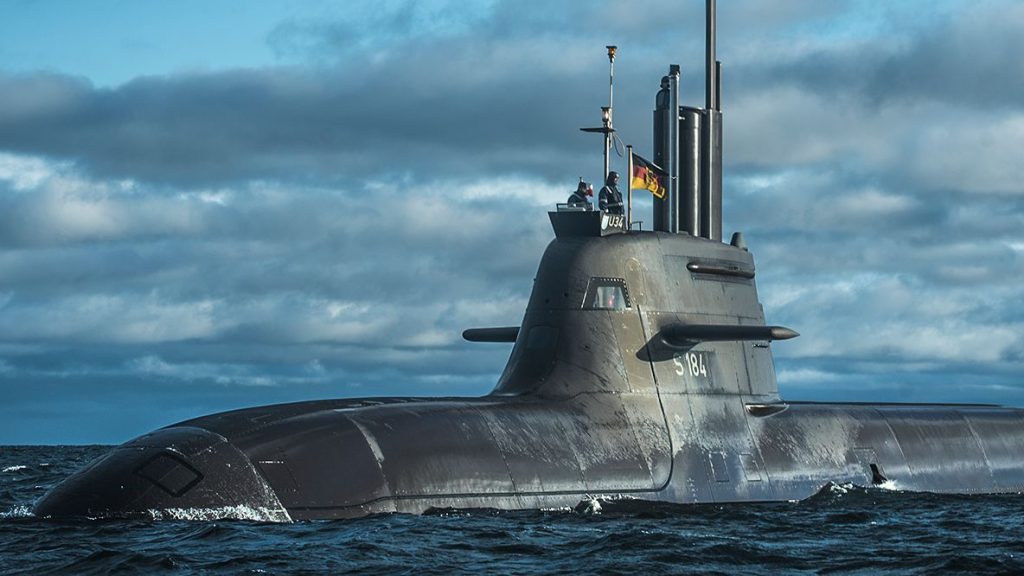
Today, TKMS is one of the world’s most experienced builders of conventional submarines and the proposed Type 212CD (Common Design)—which is currently being built for Germany and Norway and proposed for Canada—represents the next evolution of that undersea lineage. One of the major advancements is the 212CD’s advanced AIP system. Unlike the Gotland’s Stirling System, TKMS’ non-nuclear AIP system is chemical, rather than mechanical.
FUEL-CELL AIP
To be precise, the 212CD combines diesel engines and hydrogen fuel-cell based AIP as propulsion systems. In this version of AIP, hydrogen is paired with oxygen to drive fuel cells that directly generate electricity. (The hydrogen is either created onboard or stored in tanks, while the oxygen is stored in tanks.) The only byproduct of this process is pure water, which can be stored onboard (for weight balance) or used by the crew.
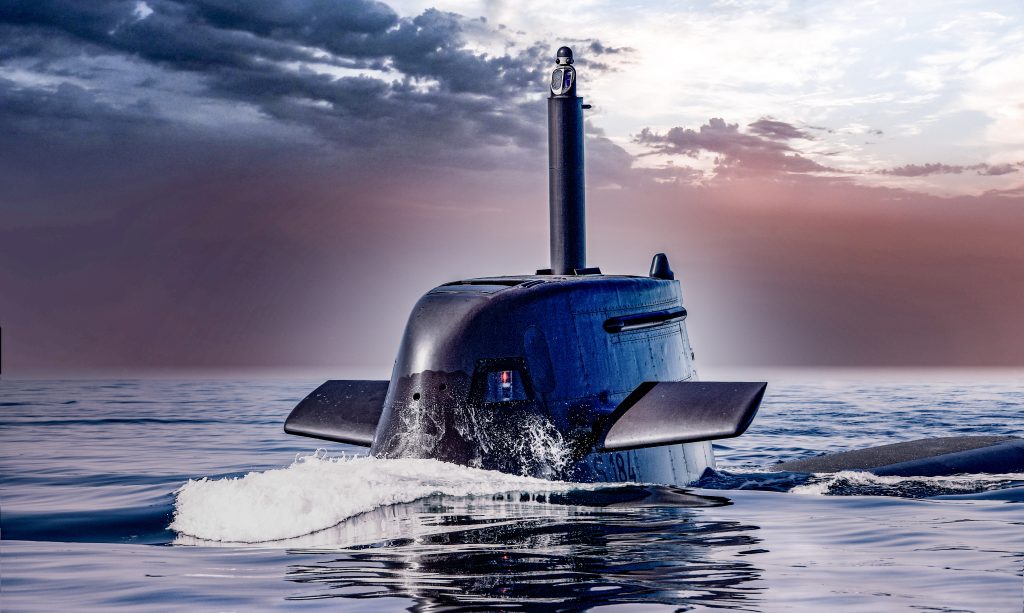
The big advantage of the 212CD’s AIP system is that it has no moving parts. There are no pistons, no shafts, and no combustion explosions; nothing to make noise at all. This makes the 212CD virtually silent when it uses AIP—quieter even than the Stirling engine. The 212CD’s AIP also produces no exhaust bubbles that could be detected by wake-homing sensors.
This is an extremely quiet boat, one that could sneak up without being detected – and could stay submerged for a long time. The 212CD’s long-term endurance is enhanced by high-capacity battery systems that extend submerged endurance and enable prolonged silent operations.
That’s not all: The shape of the 212CD’s hull has been optimized to reduce acoustic and magnetic signatures. This minimizes its detectability across multiple sensor domains. At the same time, the 212CD uses modern NATO-compatible combat systems. This allows the sub to perform a full range of maritime missions, from anti-submarine warfare to deterrence patrols, intelligence collection and undersea warfare.
What is highly relevant for Canada: The 212CD has been designed to meet Norway’s demands as an Arctic nation. This combines the lessons learned of generations of conventional submarine production and operation with the very specific requirements of the Arctic operational environment.
Not only do the 212CD’s capabilities meet or exceed Canada’s CPSP requirements, but this boat is already backed by firm orders from Germany and Norway. Twelve subs are in production: This fact will provide Canada with economies of scale, shared modernization cycles, widely accessible parts, and alliance interoperability from the outset.
THE POWER OF THE SUBMARINE
The U24’s and HSwMS Gotland’s successful “attack” on aircraft carriers underlines a truth about submarines—one that goes back to the Confederate submersible H.L. Hunley sinking USS Housatonic on February 17, 1864. No surface ship, no matter how well-protected or armed, is safe from a well-designed, well-operated submarine.
The implications extend far beyond war games. Today, carrier strike groups depend on layered anti-submarine protection to survive. They do this by integrating sonar arrays, helicopters, maritime patrol aircraft, and escort vessels into a protective carrier screen. However, if a quiet conventional submarine can defeat those layers under controlled exercise conditions, imagine the possibilities during the fog of war.
From a strategic standpoint, this creates a powerful asymmetrical battle situation and acts as a deterrent against high-powered gun-boat diplomacy or expeditionary warfare. Akin to expensive tanks being destroyed by low-cost drones, if a multi-billion-dollar carrier can be threatened by a submarine costing a fraction of that amount, it forces surface fleets to invest disproportionately in protecting their carriers. Worse yet, the defending force must detect and neutralize submarines every time their presence is assumed to protect the fleet. In contrast, the sub needs only one successful attack to win the battle.
This asymmetry is central to modern naval doctrine, where an adept David can defeat Goliath – given the right technology. This is the business case that underlies the multi-mission capabilities of the 212CD.
WHY THE 212CD MAKES SENSE FOR CANADA
From a defence standpoint, Canada’s maritime geography is demanding. If you factor in the mainland coast as well as the coasts of Canada’s 52,455 offshore islands, it measures approximately 243,042 kilometres in length. In fact, Canada has the world’s longest coastline. If a person walked 20 km a day, it would take them about 33 years to walk the entire length.
This is the vast territory that Canada has to defend. It includes three oceans and Arctic waters where detection is complicated by ice cover, shifting acoustic conditions, and extreme environmental factors.
In this context, it is clear that Canada needs capable submarines as active instruments of sovereignty. The beauty of subs for this mission is their stealthiness. When a nation’s underwater fleet can’t be seen, it aids deterrence by implying that it could be anywhere.
This is where the 212CD makes a lot of sense for Canada, particularly in the Arctic Ocean. Its AIP technology and stealthy design are ideal for travelling undetected beneath Arctic ice on long patrols.
A very tangible proof lies in the Arctic journey of the Portuguese Navy submarine NRP Arpão (S161), a TKMS-built Type 214. In April 2024, the Arpão conducted a historic patrol under the Arctic ice during Operation Brilliant Shield. Its patrol proved that a modern conventional submarine using TKMS’ fuel-cell AIP could successfully operate in the high Arctic for extended periods of time.
“We have successfully achieved our objectives of surveillance and patrol in the North Atlantic, demonstrating the capabilities of this type of conventional submarine in Arctic conditions,” said Portuguese Navy Commander Taveira Pinto, who commanded the Arpão, in a story posted on TWZ.com. “Our ability to operate across the entire spectrum of the Atlantic is a testament to our commitment to supporting the operations of the Atlantic alliance.”
It bears repeating: Successful “attacks” on U.S. Navy carriers illustrate what is possible when a quiet AIP-equipped submarine operates against the most sophisticated naval force on Earth. Now imagine that capability being applied in Canada’s Arctic approaches by the Royal Canadian Navy. In a world where Canada is very much a David, having a fleet of 212CD would help it stand up against hostile Goliaths like Russia and China.
Meanwhile, the benefits for Canada in selecting the 212CD go beyond the points noted above. “TKMS fully understands Canada’s view that submarine building is nation building,” says Burkhard. “Canada’s submarine program is not only a defence investment, but a strategic opportunity to strengthen alliances, develop high-skilled jobs, and enhance industrial longevity in key sectors of its economy. This is why TKMS is prepared to offer all options between turn-key delivery out of Germany to complete local build in Canada. We also want Canadian industry to be seamlessly integrated into TKMS’s global supply chain, with licensed local production of key components.”
THE ENDURING LESSON FROM 170 YEARS OF SUBMARINE CONSTRUCTION
The ‘sinkings’ of US carriers were not flukes but built on the legacy and cutting-edge technology of ultra-quiet conventional submarines. They are a demonstration of the power of asymmetrical warfare, when a capable boat commanded by a capable captain and crew worked together to punch well above their weight.
These victories proved that conventional subs equipped with AIP and stealth can win against the most powerful of surface adversaries – and that even for the most powerful “Goliath”, it’s great to have a few capable “Davids” by your side as allies and to watch your back. These qualities are offered by the TKMS 212CD, as the highly effective outcome of technological advances built on experience. Add the fact that 212CDs are being built for Germany and Norway – a fellow Arctic nation, and it is safe to say that buying this submarine will provide Canada with a truly mission-ready design to protect its sovereignty, deepen its partnership with Europe and add real value to NATO.
With the right technology, David can defeat Goliath – or become his indispensable ally. The 212CD is that technology.
Daniel Kitchen is CDR’s Managing Editor
